
Crawl Space Encapsulation Cost: Real Pricing, What Raises It, and What’s Worth Paying For
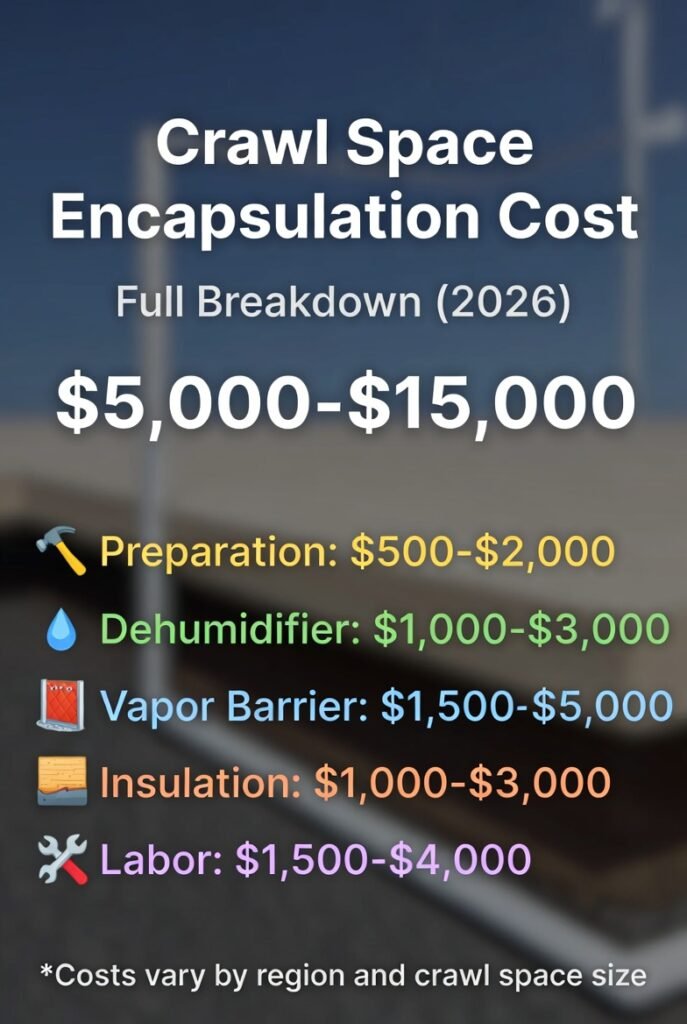
Most homeowners pay $5,000–$15,000 for full crawl space encapsulation.
- Smaller, relatively dry crawl spaces often fall near the lower end.
- Larger spaces or systems requiring drainage frequently exceed $20,000.
Typical per-square-foot pricing ranges from $3–$7 per sq ft, depending on condition and materials.
That is the realistic national band.
Before focusing on price alone, make sure encapsulation is actually necessary:
crawl space repair cost
Cost without context leads to overpaying.
Crawl Space Encapsulation Cost Per Square Foot
Contractors commonly price encapsulation by square footage.
Typical ranges:
- Basic system: $3–$4 per sq ft
- Mid-grade system: $4–$6 per sq ft
- Premium / drainage-heavy system: $6–$9+ per sq ft
Lower quotes usually mean:
- Thin 6–10 mil liner
- Limited wall coverage
- No dehumidifier
- Minimal air sealing
Higher quotes typically include:
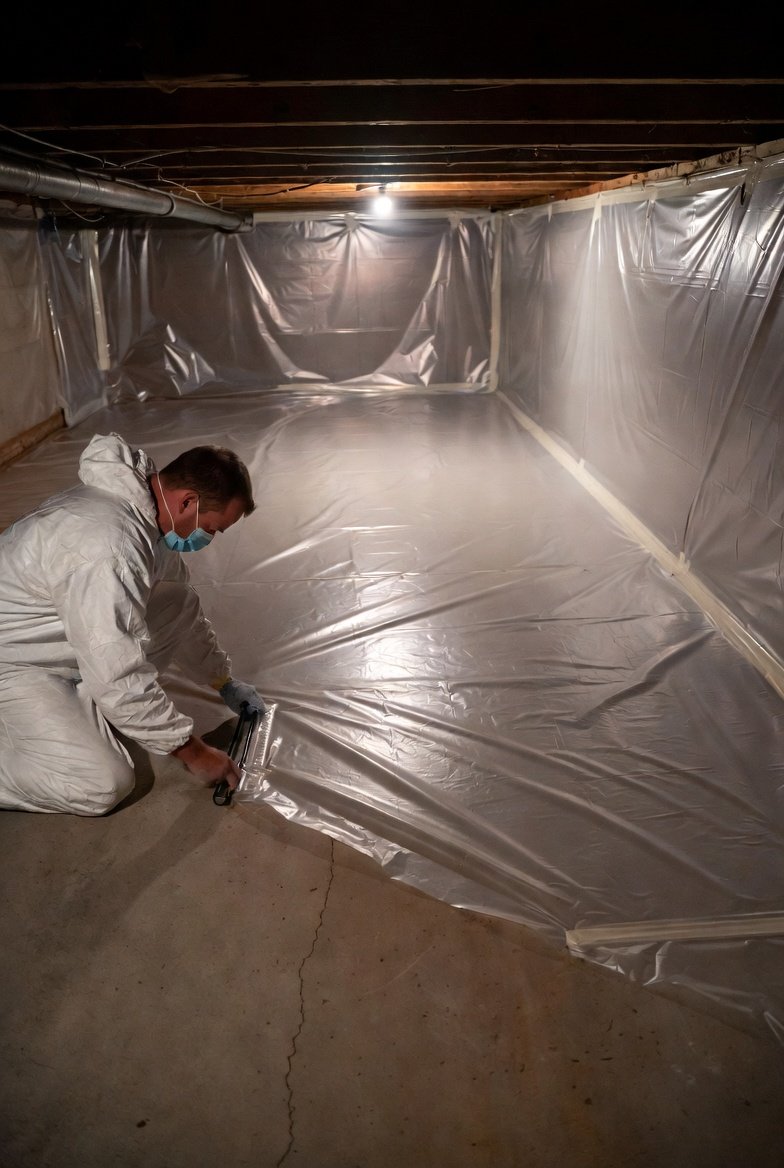
- 20 mil reinforced liner
- Full wall encapsulation
- Dehumidifier installation
- Drainage correction
- Warranty coverage
Ask what is included — not just the price per square foot.
Encapsulation Cost by Crawl Space Size
Crawl Space Size | Typical Cost Range |
800 sq ft | $4,000–$7,000 |
1,000 sq ft | $5,000–$9,000 |
1,500 sq ft | $8,000–$12,000 |
2,000 sq ft | $10,000–$16,000 |
2,500+ sq ft | $14,000–$20,000+ |
Size scales cost — but condition drives it.
If structural repairs are required before sealing, additional costs apply:
Encapsulation does not repair compromised framing.
Real-World Cost Scenarios
Scenario 1: 1,200 sq ft, Humid Southeast, No Standing Water
Full 20 mil liner + dehumidifier
Estimated Cost: $8,500–$11,000
Scenario 2: 1,800 sq ft, Minor Drainage Issues
Includes sump pump + interior drain correction
Estimated Cost: $14,000–$18,000
Scenario 3: 900 sq ft, Dry Climate, Humidity Only
Mid-grade system without drainage
Estimated Cost: $5,000–$7,500
These examples show why square footage alone doesn’t determine price.
Cost by Condition (The Biggest Variable)
Dry but Humid
$5,000–$9,000
No standing water, no rot.
Minor Drainage Required
$8,000–$14,000
Includes perimeter drain or sump.
Drainage options explained here:
crawl space drainage solution
Active Groundwater Intrusion
$12,000–$20,000+
Full water management before sealing.
Mold Present
Encapsulation follows remediation.
Mold treatment pricing:
crawl space mold treatment cost
Ignoring condition inflates future repair costs.
What Drives Encapsulation Cost
✔ Crawl space size
✔ Liner thickness
✔ Dehumidifier capacity
✔ Drainage systems
✔ Mold remediation
✔ Accessibility constraints
✔ Local labor rates
Climate matters too.
Cost Differences by Region
Humid Southeast & Midwest
Encapsulation common; competitive pricing.
Cold Northern States
Air sealing critical; insulation complexity increases cost.
High Labor Markets (West Coast / Northeast)
Expect 10–25% higher labor rates.
Arid Regions
Encapsulation often unnecessary unless drainage issues exist.
Regional context changes both necessity and pricing.
How to Compare Encapsulation Quotes
This is where most homeowners lose money.
When reviewing bids, verify:
- Liner thickness (in writing)
- Wall coverage included
- Seam sealing method
- Vent sealing method
- Dehumidifier brand & capacity
- Drainage scope defined
- Warranty length and coverage
A lower quote often excludes critical components.
A higher quote may include long-term durability.
Clarity beats guessing.
When Encapsulation Is Overpriced
Encapsulation may be unnecessary when:
- Crawl space stays dry year-round
- Only minor ground vapor exists
- No humidity measurements were taken
- No drainage inspection performed
In some cases, a ground vapor barrier is sufficient:
Full encapsulation is a professional system — but not every crawl space needs one.
The Cost of Waiting
Delaying encapsulation when moisture is structural can lead to:
- Mold remediation costs
- Subfloor replacement
- Joist repair
- Insulation replacement
- HVAC efficiency loss
Repairing framing later is significantly more expensive than controlling humidity early.
Does Encapsulation Increase Home Value?
Encapsulation rarely increases resale value dollar-for-dollar.
But it often provides:
- Lower crawl space humidity
- Reduced HVAC strain
- Odor elimination
- Improved inspection outcomes
- Greater buyer confidence
It protects against future loss more than it creates profit.
How Long Does Encapsulation Last?
A professionally installed system typically lasts 15–25 years.
Longevity depends on:
- Installation quality
- Liner durability
- Drainage reliability
- Maintenance
Maintenance guidance:
encapsulated crawl-space-maintenance
Should You Move Forward?
Encapsulation is typically worth it if:
- Humidity remains above 60%
- Wood moisture exceeds safe thresholds
- Mold keeps returning
- You plan long-term home ownership
If moisture is minor and seasonal, start smaller.
Cost clarity is about right-sizing the solution — not buying the biggest system.
FAQ
How much does crawl space encapsulation cost?
Most homeowners pay between $5,000 and $15,000, with per-square-foot pricing typically ranging from $3 to $7 depending on crawl space size, moisture severity, liner thickness, and whether drainage work is required.
What increases encapsulation cost the most?
Drainage systems, thicker reinforced liners (16–20 mil), mold remediation, structural repairs, and high-capacity dehumidifiers significantly increase overall encapsulation cost. Labor difficulty and limited crawl space access can also raise pricing.
Does insurance cover crawl space encapsulation?
Insurance typically does not cover encapsulation unless it is directly tied to a covered water damage event, such as a sudden pipe burst. Preventative moisture control systems are generally considered homeowner responsibility.
How long does installation take?
Most crawl space encapsulation projects take between 2 and 5 days to complete. Larger crawl spaces, required drainage installation, mold remediation, or structural repairs can extend the timeline.
Can encapsulation fail?
Yes. Encapsulation can fail if drainage issues are not corrected beforehand, foundation vents are not fully sealed, moisture is trapped inside the system, or the dehumidifier is undersized or not properly maintained. Proper diagnosis and installation quality are critical for long-term performance.