
Crawl Space Encapsulation: What It Is, How It Works, and When It’s Worth It
Not every damp crawl space needs encapsulation.
But some absolutely do.
The difference comes down to one question:
Is moisture occasional — or structural?
When humidity remains elevated for long periods, wood framing absorbs moisture, insulation deteriorates, mold develops, and floors begin to soften. At that point, the crawl space becomes a structural risk zone — not just a nuisance.
If you are currently seeing pooling or saturated soil, begin with
water in crawl space
Encapsulation is not the first step in active flooding.
It is a long-term environmental stabilization system.
What Crawl Space Encapsulation Actually Is
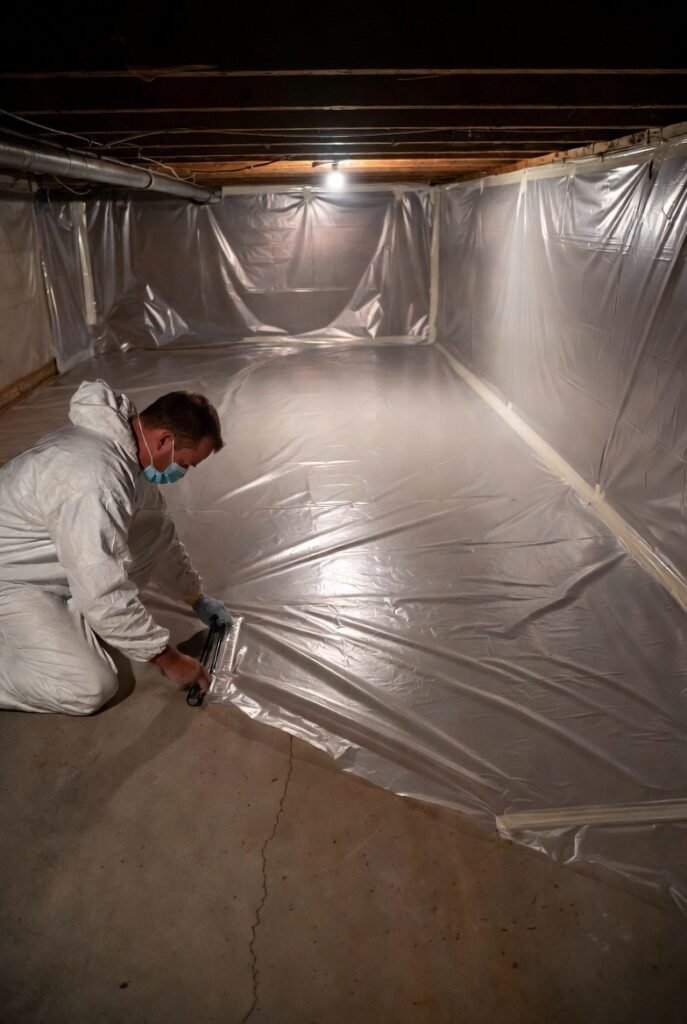
Crawl space encapsulation is the process of sealing and conditioning a crawl space to control:
- Ground moisture vapor
- Air exchange
- Humidity levels
A full encapsulation system typically includes:
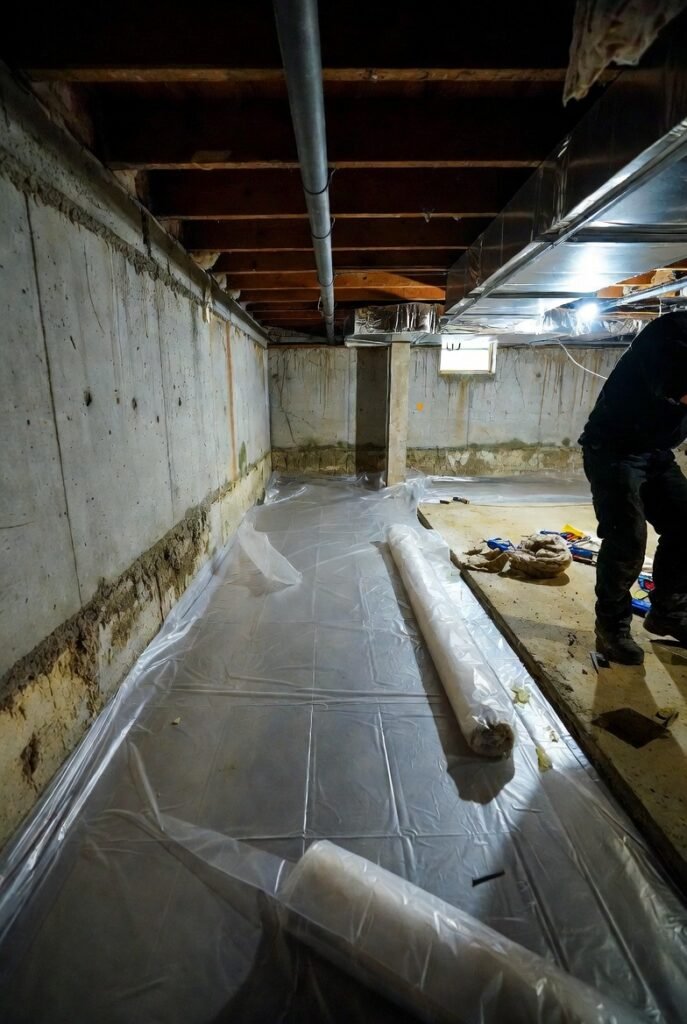
- 12–20 mil reinforced ground liner
- Liner sealed and extended up foundation walls
- Permanently sealed vents
- Rim joist air sealing
- Wall insulation (not subfloor insulation)
- Dedicated crawl space dehumidifier
- Drainage correction if needed
Encapsulation converts a vented crawl space into a controlled, semi-conditioned space.
It is not just plastic on the floor. That limited solution is explained here:
crawl space vapor barrier
Encapsulation addresses the entire moisture cycle.
Why Moisture Becomes Structural
Traditional vented crawl spaces rely on outdoor air for drying.
In humid climates, this design works against the home.
Warm, moist air enters through vents. When it contacts cooler framing and ductwork, condensation forms. Over time:
- Wood moisture exceeds ~16–18%
- Mold growth becomes likely above ~60% humidity
- Insulation collapses
- Fasteners corrode
- Subfloor materials weaken
Encapsulation stabilizes that environment.
However, if framing is already compromised, structural repair must come first. Review:
crawl space repair cost
Sealing damaged wood does not repair it.
Encapsulation vs Vapor Barrier
Feature | Vapor Barrier | Full Encapsulation |
Ground liner | Yes | Yes |
Wall liner | No | Yes |
Vent sealing | No | Yes |
Air sealing | No | Yes |
Dehumidifier | No | Yes |
Humidity control | Limited | Comprehensive |
A vapor barrier slows evaporation.
Encapsulation seals and conditions the entire space.
DIY note:
A ground vapor barrier can be installed by experienced homeowners.
Full encapsulation — including air sealing and humidity control — is typically a professional system.
When Encapsulation Makes Sense
Encapsulation is commonly justified when:
- Relative humidity remains above 60%
- Wood moisture exceeds 16%
- Mold repeatedly returns
- HVAC ducts sweat in summer
- Musty odors enter the living space
If mold is active, remediation should occur first:
crawl space mold treatment cost
If standing water exists, drainage must be corrected first:
crawl space drainge solution
Encapsulation should never trap active water.
When Encapsulation Can Be a Bad Idea
Encapsulation is not appropriate when:
- Active groundwater intrusion has not been corrected
- Structural rot is already advanced
- Poor installation traps moisture
- The home is in a very dry climate
- Crawl space access is too limited for proper sealing
Encapsulation done incorrectly can worsen conditions.
Diagnosis matters.
Encapsulation by Climate Zone
Humid Southeast / Midwest:
Encapsulation is often justified due to sustained humidity and soil moisture.
Cold Northern Climates:
Air sealing is critical, but insulation strategy must be carefully planned to avoid condensation.
Arid Regions:
Encapsulation is often unnecessary unless drainage problems exist.
Climate context affects both necessity and system design.
How Much Does Crawl Space Encapsulation Cost
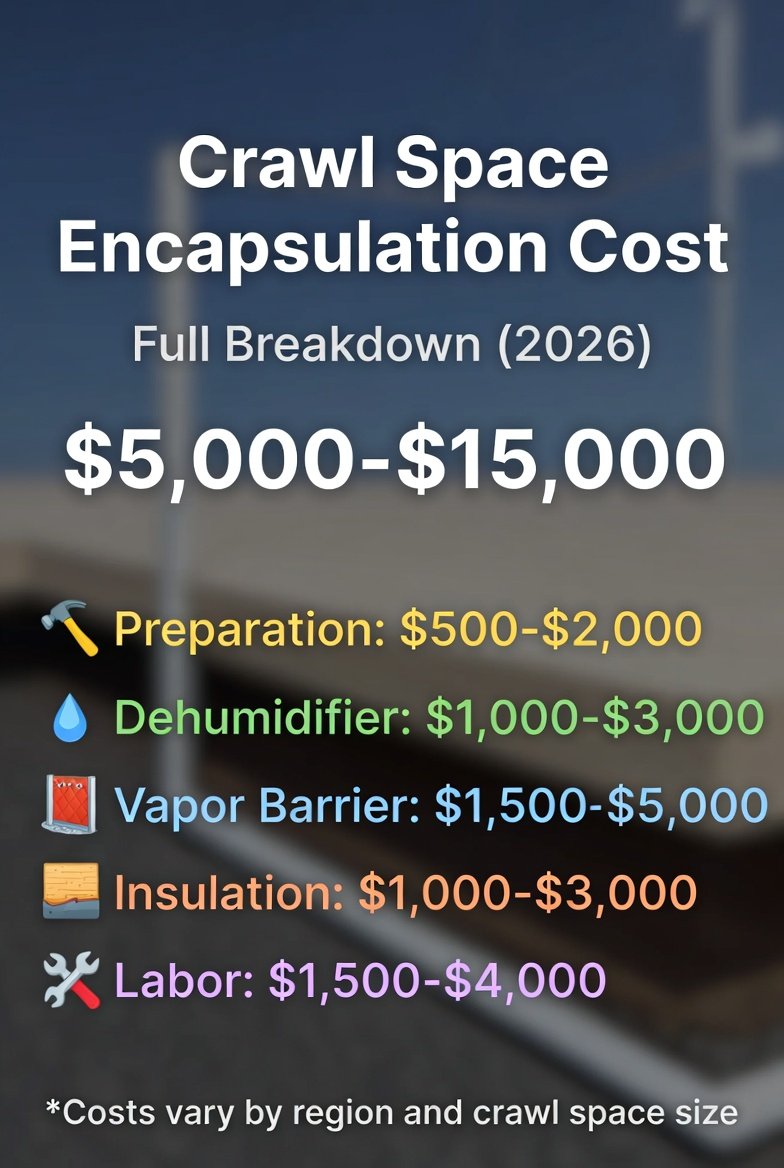
Most homeowners pay $5,000–$15,000, with:
- Small, relatively dry crawl spaces at the lower end
- Larger spaces or systems requiring drainage often exceeding $20,000
Costs depend on:
- Square footage
- Moisture severity
- Drainage work
- Liner thickness
- Dehumidifier size
For detailed breakdown scenarios, see:
crawl space encapseulation cost
Cost clarity before commitment prevents sticker shock.
What Homeowners Typically Gain
Encapsulation does not “increase value” in a dramatic way.
But it often provides:
- Lower crawl space humidity
- Reduced HVAC strain
- Odor elimination
- More stable floors
- Improved inspection outcomes
- Greater resale confidence
It functions as risk mitigation and environmental stabilization.
How Long It Lasts
A properly installed system typically lasts 15–25 years.
Longevity depends on:
- Installation quality
- Liner thickness
- Drainage reliability
- Dehumidifier maintenance
Maintenance guidance:
crawl space maintenance
Final Perspective
Crawl space encapsulation is not a cosmetic upgrade.
It is a moisture control system designed to stabilize crawl space environments when evidence supports intervention.
The correct question is not:
“Is encapsulation good?”
The correct question is:
“Does my crawl space require full environmental control?”
When moisture becomes structural, encapsulation becomes rational.
Frequently Asked Questions About Crawl Space Encapsulation
1.Is crawl space encapsulation worth it?
Encapsulation is typically worth it when crawl space humidity remains elevated for long periods, mold continues to return, or wood moisture content exceeds safe structural thresholds (generally above 16–18%).
It is most justified when moisture is persistent and creating structural or indoor air quality risks — not when dampness is occasional or seasonal.
2.Does encapsulation increase home value?
Crawl space encapsulation rarely increases resale value dollar-for-dollar.
However, it often improves inspection outcomes, reduces buyer concerns about moisture or mold, and increases overall buyer confidence.
It functions more as risk mitigation and environmental stabilization than as a direct value-add renovation.
Can crawl space encapsulation fail?
Yes. Encapsulation can fail if:
- Drainage issues are not corrected before sealing
- Active groundwater intrusion is trapped
- Foundation vents are not properly sealed
- The dehumidifier is undersized or poorly maintained
- Structural damage is sealed without being repaired
Proper diagnosis and installation quality determine long-term performance.
Does encapsulation replace insulation?
Encapsulation does not eliminate insulation — it relocates it.
In most systems, insulation is moved from the subfloor to the foundation walls. This allows the crawl space to become a controlled, semi-conditioned environment rather than an exposed, vented cavity.