
Crawl Space Encapsulation Lifespan: How Long It Really Lasts
Encapsulation is marketed as a long-term moisture control solution.
But what does “long-term” actually mean?
Quick Answer
A properly installed 12–20 mil crawl space encapsulation system typically lasts 15–25 years.
Heavy-duty 20+ mil liners may reach 20–30+ years in stable conditions.
Dehumidifiers usually require replacement every 5–10 years.
Encapsulation lifespan depends on material thickness, installation quality, climate, and maintenance — not just time.
If you’re reviewing the full system structure, see:
https://crawlspacerepairguide.com/crawl-space-encapsulation/
Crawl Space Encapsulation Lifespan by Component
Encapsulation systems do not age uniformly.
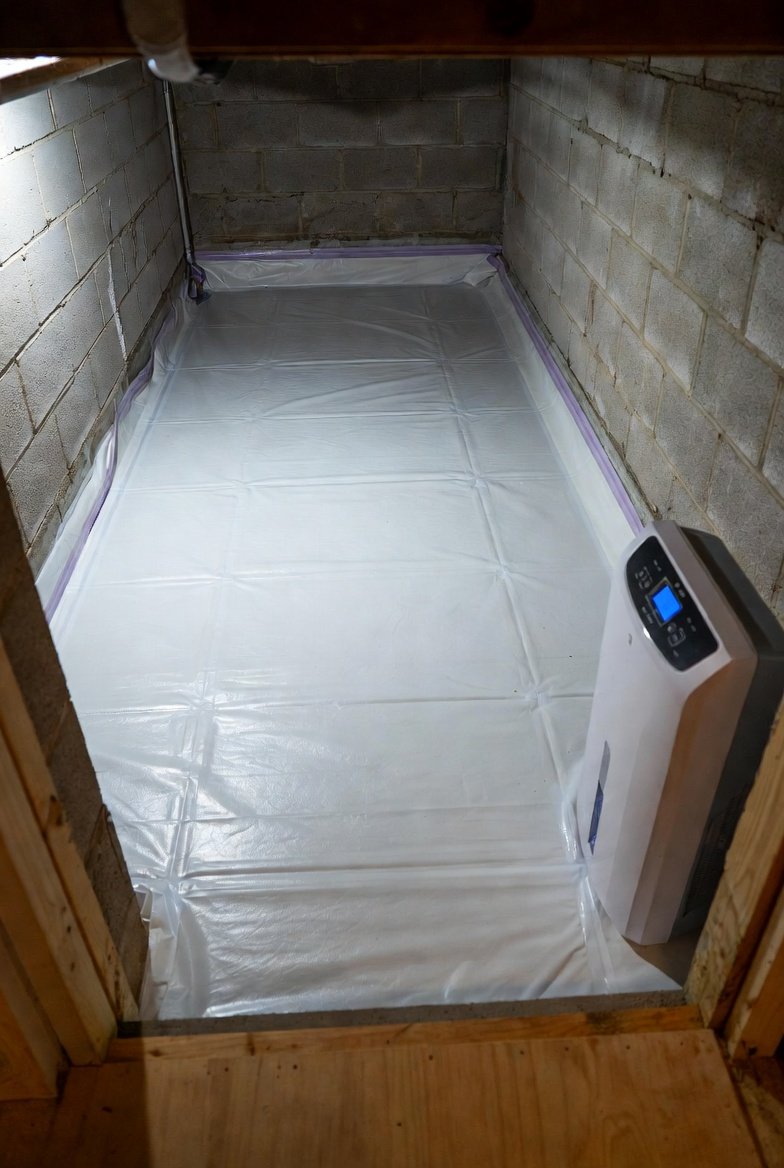
Floor Liner Lifespan
High-quality floor liners last 15–25 years when:
- Installed over smooth soil
- Properly sealed at seams
- Protected from heavy traffic
Thin 6 mil vapor barriers, by contrast, often last only 5–10 years.
Compare system differences here:
https://crawlspacerepairguide.com/crawl-space-vapor-barrier/
Wall Liner Durability
Wall liners typically last longer than floor liners because they experience less abrasion.
Proper seam sealing is critical to vapor barrier durability.
Seam Tape & Adhesives
Seams are often the first weak point.
Poor installation may cause separation within 5–10 years.
Quality seam systems in humidity-controlled spaces often last 15+ years.
Crawl Space Dehumidifier Replacement Timeline
Most dehumidifiers last 5–10 years depending on runtime and climate demand.
Hot-humid climates increase workload and shorten lifespan.
For installation cost context:
https://crawlspacerepairguide.com/crawl-space-encapsulation-cost/
Sump Pumps
Average lifespan: 7–10 years.
Backup systems extend reliability but not component lifespan.
Mil Thickness Comparison & Durability Impact
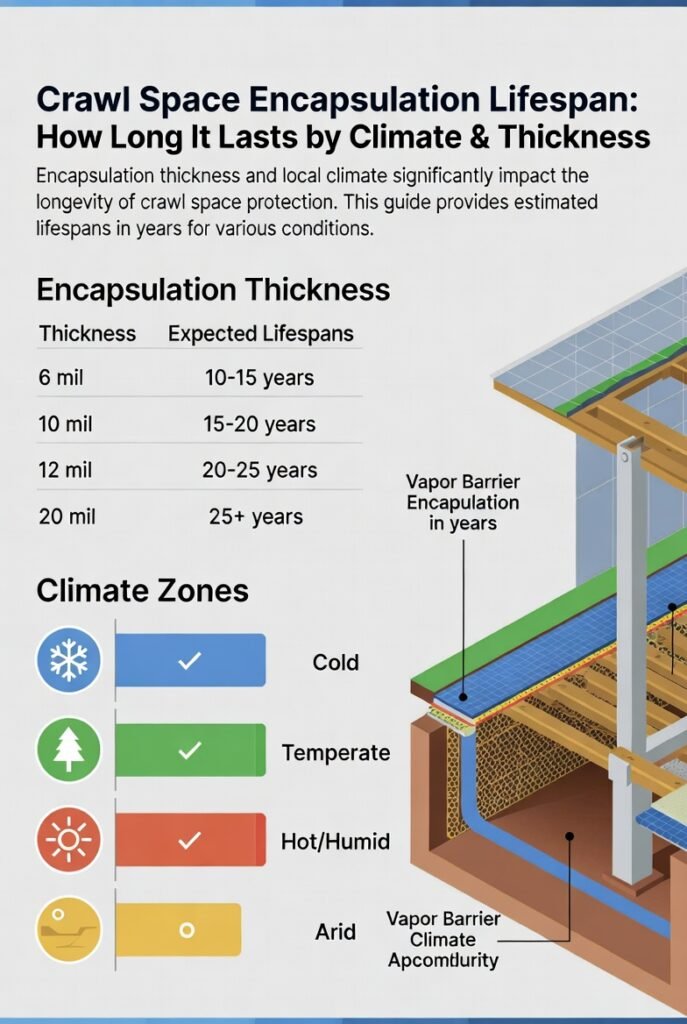
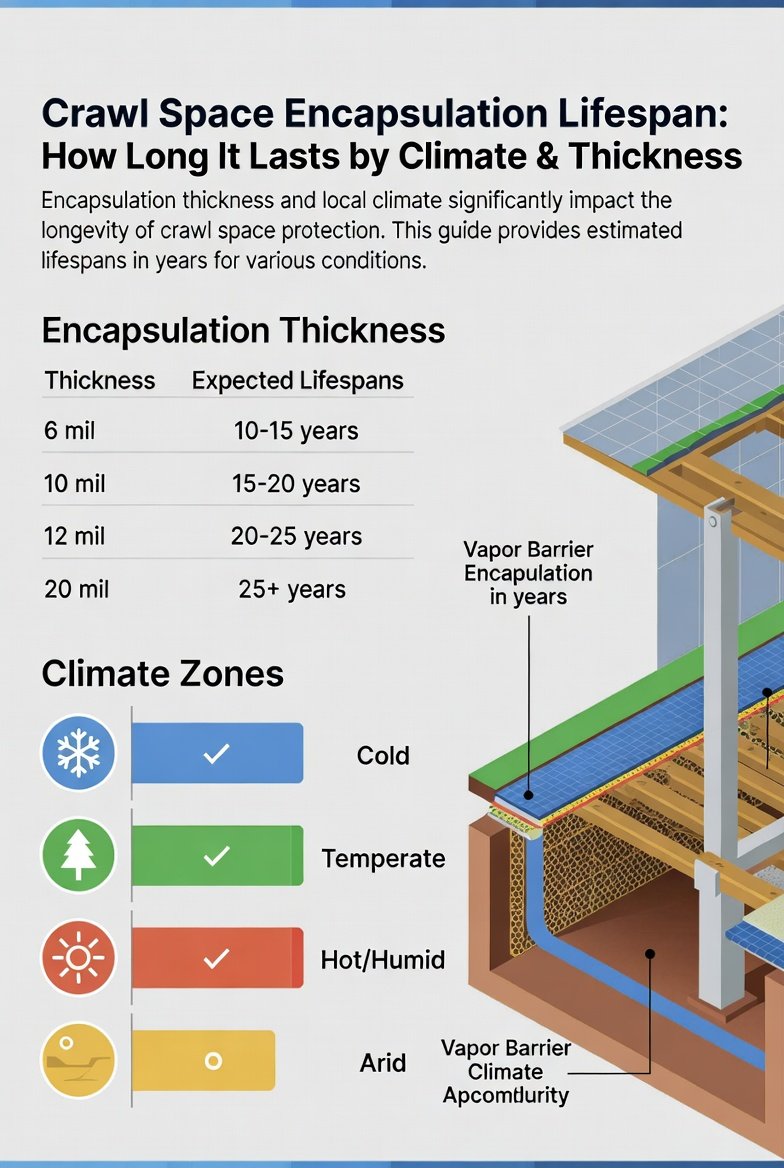
Liner thickness strongly affects crawl space encapsulation lifespan.
Thickness | Lifespan | Typical Use |
6 mil | 5–10 yrs | Basic vapor barrier |
10–12 mil | 12–20 yrs | Light encapsulation |
15–20 mil | 15–25 yrs | Residential heavy-duty |
20+ mil | 20–30+ yrs | Commercial-grade |
Thicker liners resist:
- Crawl space traffic damage
- Gravel punctures
- Long-term seam fatigue
For cost-per-thickness breakdown:
https://crawlspacerepairguide.com/crawl-space-encapsulation-cost-per-square-foot/
What Shortens Crawl Space Liner Life
Snippet Block
Crawl space encapsulation lifespan is reduced by:
- Standing water beneath the liner
- Ignored exterior drainage
- Heavy foot traffic
- Rodent damage
- High humidity above 60%
- Poor seam installation
According to the EPA, sustained indoor relative humidity above 60% promotes mold growth in enclosed spaces. Excess moisture also stresses adhesives and seam tape.
Drainage correction is often more important than liner thickness:
https://crawlspacerepairguide.com/crawl-space-drainage-solutions/
Mini Case Example: High-Traffic Damage
A homeowner frequently accessed plumbing lines.
After 8 years, punctures developed along repeated walking paths.
The liner required patching, not full replacement.
Usage intensity matters.
Mini Case Example: Drainage Ignored
Encapsulation was installed before correcting grading issues.
Seasonal seepage accumulated beneath the liner, stressing seam tape.
Within 7 years, seams began separating — not due to material failure, but water pressure beneath the system.
This is a common cause of premature encapsulation troubleshooting.
See related failure signs:
https://crawlspacerepairguide.com/crawl-space-encapsulation-problems/
Mini Case Example: Hot-Humid Climate Burnout
In a coastal region, a dehumidifier ran nearly year-round.
After 6 years, the unit failed due to continuous load.
The liner remained intact — equipment lifespan shortened, not the encapsulation system.
Climate directly affects crawl space encapsulation lifespan by climate zone.
Repair vs Replacement Cost Overview
Encapsulation rarely requires full replacement.
Issue | Repair Cost | Time |
Seam tape separation | $200–$500 | 1 day |
Minor liner patch | $150–$400 | Same day |
Dehumidifier replacement | $1,000–$2,500 | 1 day |
Drainage correction | $1,500–$6,000 | 1–3 days |
Localized repair is common. Full system replacement is uncommon.
Crawl Space System Maintenance Checklist
To extend crawl space liner life:
✔ Inspect seams annually
✔ Check humidity seasonally
✔ Replace dehumidifier filters
✔ Inspect after heavy storms
✔ Avoid unnecessary crawl space traffic
Preventive maintenance significantly extends encapsulation lifespan.
Crawl Space Encapsulation Lifespan by Climate
Hot-Humid
Higher moisture load increases dehumidifier workload.
Cold
Condensation cycles stress ductwork and seams.
Mixed
Seasonal humidity swings require monitoring.
Building science principles show that dew point management — not just sealing — determines long-term system durability.
Ownership Timeline Consideration
If you plan to stay 10–15 years, encapsulation often exceeds your ownership horizon.
For broader decision logic, see:
https://crawlspacerepairguide.com/is-crawl-space-encapsulation-worth-it/
Key Takeaways
- High-quality encapsulation lasts 15–25 years.
- Equipment lifespan is shorter than liner lifespan.
- Thickness and installation matter most.
- Drainage and humidity control determine durability.
- Full replacement is rare.
Encapsulation is durable — when the entire moisture control system is correct.
FAQs
How long does crawl space encapsulation last?
High-quality systems typically last 15–25 years depending on thickness, climate, and installation quality.
What is the difference between 10 mil and 20 mil crawl space liners?
20 mil liners provide significantly greater puncture resistance and durability, often extending lifespan by several years under similar conditions.
How often should I inspect crawl space liner seams?
At least once per year and after major storms or plumbing work.
Does crawl space traffic reduce encapsulation lifespan?
Yes. Repeated walking paths can create punctures over time unless protective boards are used.
How long does a crawl space dehumidifier last?
Most units last 5–10 years depending on runtime and climate load.
Can encapsulation last 30 years?
Heavy-duty commercial liners in stable environments may approach 20–30+ years.
Does climate affect encapsulation durability?
Yes. Hot-humid climates increase equipment workload and seam stress.
How do I extend crawl space liner life?
Maintain humidity control, protect high-traffic areas, inspect seams annually, and correct drainage issues promptly.