
Crawl Space Vapor Barrier: Thickness Guide, Code Standards & Installation Best Practices
Most crawl space moisture problems don’t start with flooding.
They start with exposed soil.
Bare earth constantly releases water vapor. Even without standing water, evaporation alone can push humidity high enough to support mold growth and wood decay. The U.S. Department of Energy (DOE) identifies exposed soil as a major moisture contributor in crawl spaces, and the EPA recommends keeping indoor humidity below 60% to reduce mold risk.
A crawl space vapor barrier — also called a moisture barrier for crawl space floors — is the foundational step in moisture control.
But thickness alone isn’t enough. Code minimum isn’t the same as long-term durability. And poor installation is the #1 reason barriers fail.
This guide covers:
- What a vapor barrier actually does
- Code requirements vs real-world durability
- 6 mil vs 10 mil vs 20 mil decision matrix
- Professional installation standards
- Failure modes & repair strategy
- When to upgrade to encapsulation
- Inspection & resale impact
No hype. Just structured, field-tested clarity.
What a Crawl Space Vapor Barrier Actually Does (And Doesn’t Do)
A vapor barrier reduces moisture vapor diffusion from soil into the crawl space air.
It does NOT:
- Stop groundwater intrusion
- Replace drainage systems
- Eliminate condensation from plumbing leaks
If there is standing water, address that first:
https://crawlspacerepairguide.com/water-in-crawl-space/
Think of a vapor barrier as moisture diffusion control — not flood protection.
Code Minimum vs “Built to Last” Reality
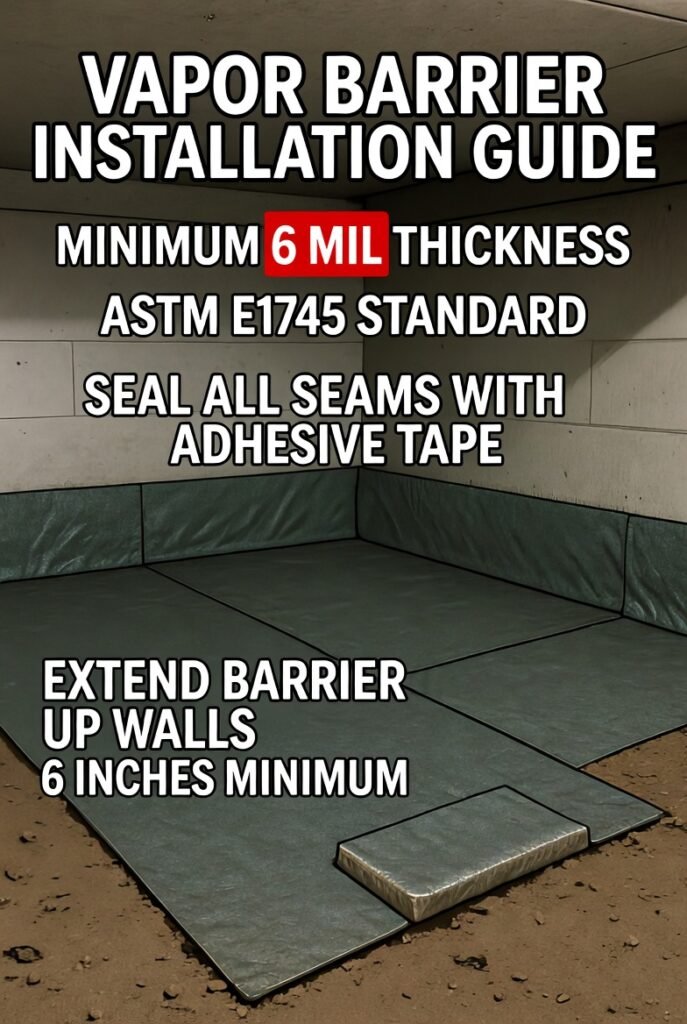
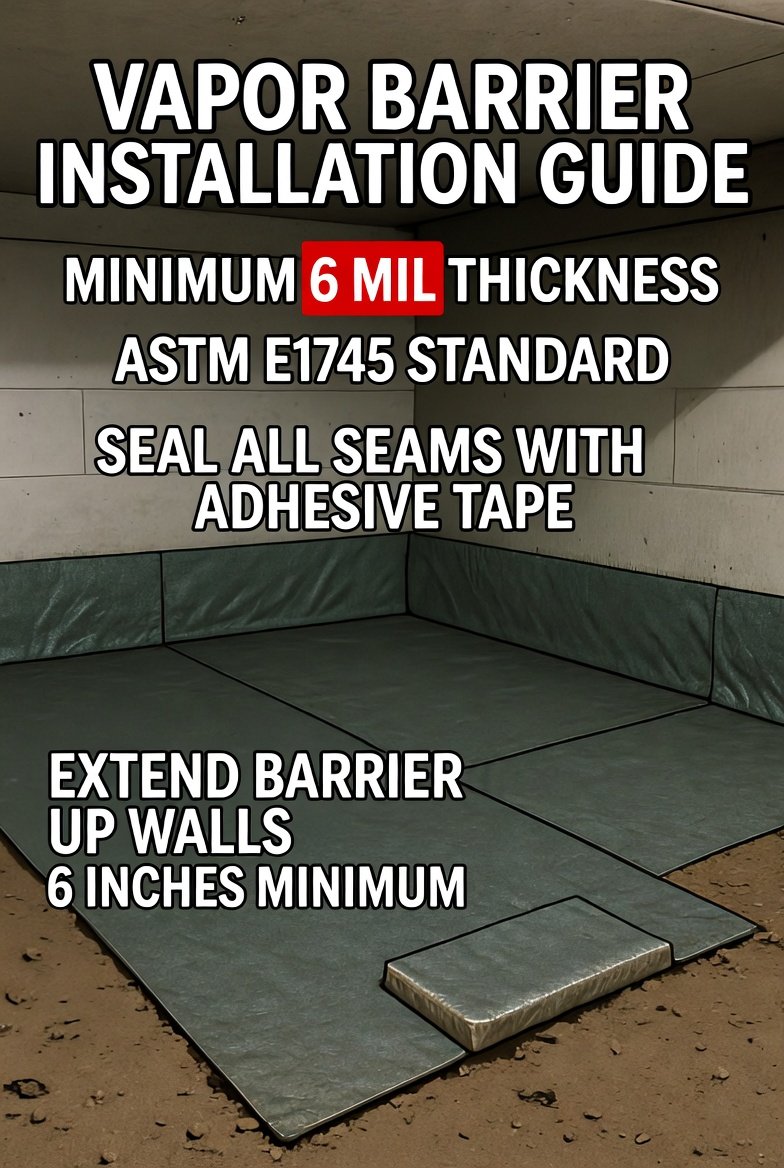
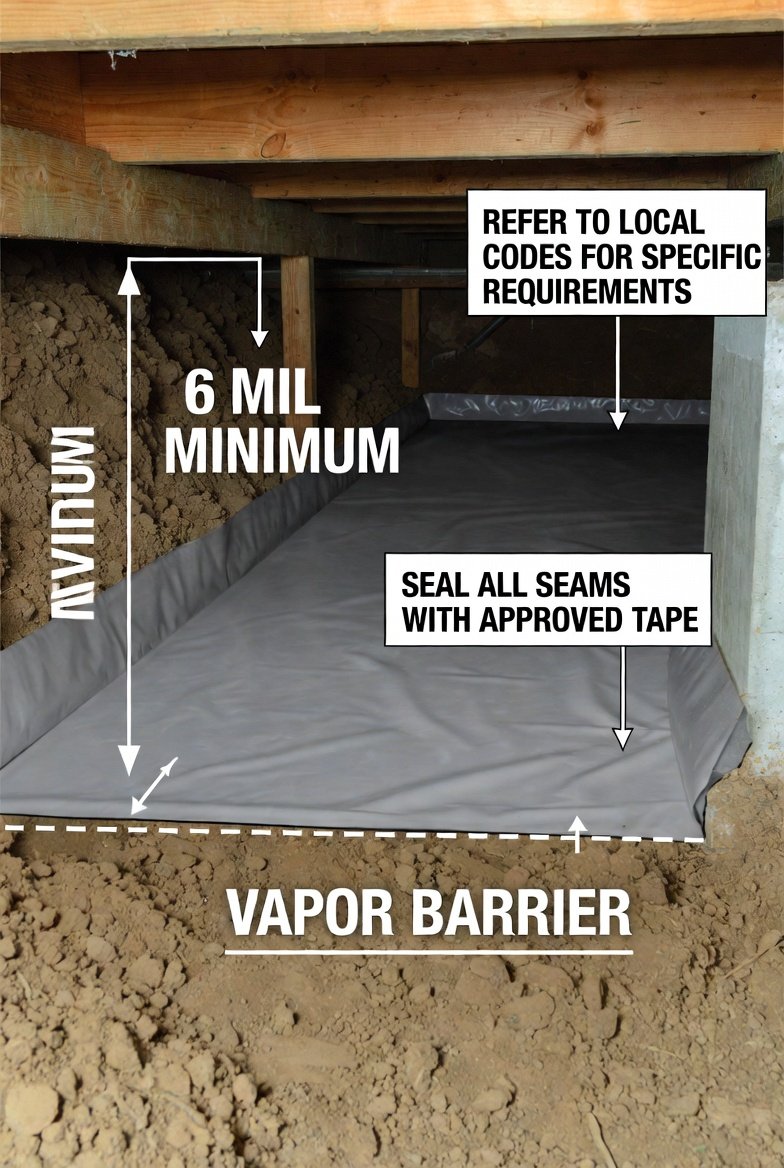
Under International Residential Code (IRC R408), exposed earth in crawl spaces typically must be covered with a vapor retarder (often minimum 6-mil polyethylene). That satisfies diffusion control.
But code minimum does not account for:
- Foot traffic
- HVAC service access
- Rodent damage
- Rough soil punctures
- Seam creep over time
Minimum to pass ≠ minimum to last.
Most professional installers prefer 10–20 mil material for durability and long-term integrity.
Thickness Decision Matrix: 6 vs 10 vs 20 Mil
Thickness determines puncture resistance and lifespan.
Condition | Recommended Thickness |
Rare access, smooth soil | 6 mil (code minimum) |
Light service access | 10–12 mil |
Regular access, HVAC/plumbing traffic | 15–20 mil |
Rough soil, high durability need | 20 mil + geotextile underlayment |
Why Underlayment Matters
A geotextile fabric beneath thicker liners dramatically reduces punctures — especially in crawl spaces with gravel or debris. This is rarely mentioned in ranking pages but makes a major durability difference.
Professional Installation Standards (Spec-Level)
Most failures come from poor install — not wrong thickness.
1. Full Soil Coverage
Every inch of exposed soil must be covered.
Partial coverage defeats moisture control.
2. Seam Overlap
- Code minimum: ~6 inches
- Professional standard: 12 inches
Seams must be taped with acrylic seam tape designed for polyethylene. Duct tape fails quickly in humid environments.
3. Wall Run-Up Height
Barrier should extend:
- Minimum: 6–12 inches up foundation wall
- High-performance install: up to full wall height (if encapsulating)
Mechanical fastening (termination bars or anchors) is superior to adhesive-only attachment.
4. Piers & Penetrations
Each support pier should be wrapped and sealed.
Plumbing and electrical penetrations must be cut tight and sealed to prevent vapor bypass.
5. Termite Inspection Gap
In some regions, local codes require a small inspection gap between liner and sill plate to allow termite inspection. Always confirm local requirements.
Common Failure Modes → Diagnosis & Fix
Symptom | Likely Cause | Quick Test | Fix |
Plastic wet on top | Condensation or plumbing leak | Check humidity & pipes | Add dehumidifier or repair leak |
Mold persists | Incomplete coverage | Inspect soil exposure | Seal uncovered areas |
Torn plastic | Thin material or traffic | Visual inspection | Patch or upgrade thickness |
Seams separating | Improper tape | Check adhesion | Re-tape with proper seam tape |
Wall detachment | Adhesive-only install | Inspect anchor points | Add mechanical fasteners |
Many homeowners mistake condensation for groundwater. A humidity reading above 60% suggests vapor or air moisture issue — not necessarily soil water intrusion.
If mold is present, review:
https://crawlspacerepairguide.com/mold-in-crawl-space/
Vapor Barrier vs Full Encapsulation
A vapor barrier is a component.
Encapsulation is a sealed system including:
- Floor liner
- Wall liner
- Sealed vents
- Dehumidifier
If you’re weighing full-system upgrades, compare:
https://crawlspacerepairguide.com/crawl-space-encapsulation-cost/
And understand structural airflow implications here:
https://crawlspacerepairguide.com/vented-vs-encapsulated-crawl-space/
When a Vapor Barrier Alone Is Enough
- Mild climate
- No standing water
- Crawl space humidity under 60%
- No insulation sagging
- No persistent odor
In these cases, ground vapor control may be sufficient.
When to Upgrade Beyond a Barrier
- Humid climate
- Chronic condensation
- HVAC duct sweating
- Persistent musty odor
- Recurrent mold growth
Barrier + dehumidifier often becomes necessary.
Dehumidifier sizing guide:
https://crawlspacerepairguide.com/crawl-space-dehumidifier/
Inspection & Resale Checklist
Home inspectors typically look for:
- Exposed soil
- Torn or displaced plastic
- Unsealed seams
- Mold growth
- Improper wall termination
A properly installed vapor barrier:
- Improves visual presentation
- Reduces moisture-related repair credits
- Signals proactive maintenance
It may not add direct appraisal value — but it reduces negotiation leverage.
Annual Maintenance Checklist
Once installed, inspect annually:
- Check seam adhesion
- Look for punctures
- Verify wall termination
- Confirm no new soil exposure
- Inspect after heavy rain
Even 20 mil material can fail if neglected.
Frequently Asked Questions
Is a vapor barrier required by code?
In most jurisdictions, exposed soil must be covered with a vapor retarder under crawl space code requirements.
What thickness is best for most homes?
10–12 mil offers strong durability without the cost of 20 mil. Heavier liners are recommended for high traffic areas.
Should seams be taped or just overlapped?
Both. Overlap at least 6–12 inches and tape seams with compatible polyethylene seam tape.
Does a vapor barrier prevent mold?
It reduces ground vapor but does not eliminate all mold risk. Humidity control may still be necessary.
Do I need a dehumidifier with a vapor barrier?
In humid climates, often yes. The barrier reduces vapor load but may not maintain ideal humidity alone.
How far up the wall should it go?
Minimum 6–12 inches. Higher for performance installs.
Can I install a vapor barrier myself?
Yes, for simple installs. Larger or moisture-prone spaces benefit from professional sealing.
What happens if the plastic gets wet on top?
Often condensation or plumbing leaks — not groundwater. Check humidity and inspect pipes.
Final Perspective
A crawl space vapor barrier is the foundation of moisture control — but not a cure-all.
The real decision isn’t just thickness.
It’s:
- Climate
- Moisture history
- Durability needs
- Installation quality
Code minimum protects against diffusion.
Durability tier protects against real-world use.
Choose accordingly — and inspect annually.