
Encapsulated Crawl Space Maintenance: The 10-Year Protection Plan
Encapsulation doesn’t fail loudly.
It drifts.
Humidity rises from 50% to 62%. Seam tape loosens at a pier. A drain line clogs after heavy rain. Nothing urgent — until mold returns or framing moisture climbs high enough to threaten structural integrity.
Encapsulation is a controlled system.
Maintenance keeps it controlled.
This guide outlines the exact 10-year maintenance strategy for an encapsulated crawl space — including humidity monitoring, vapor barrier inspection, component lifespan, climate adjustments, and real-world cost prevention.
For system fundamentals, review:
https://crawlspacerepairguide.com/crawl-space-encapsulation/
Humidity Control: The Core of Crawl Space Mold Prevention
The EPA recommends keeping indoor humidity below 60% to reduce mold risk. In sealed crawl spaces, professionals aim tighter:
Target Range: 45–55% Relative Humidity
Why it matters:
- 60%+ RH → Mold growth accelerates
- Sustained moisture → Wood moisture content increases
- Stable mid-range → Structural framing remains protected
According to major crawl space dehumidifier manufacturers, maintaining RH below 55% significantly extends equipment lifespan and reduces compressor strain.
If your system includes humidity control equipment, review maintenance guidance here:
https://crawlspacerepairguide.com/crawl-space-dehumidifier/
Tip: Install a remote humidity monitor with alert notifications. Early detection prevents expensive remediation.
Monthly 5-Minute Check → Prevent Costly Repairs
- Verify humidity reading
- Confirm dehumidifier operation
- Check sump pump status
- Look for visible water intrusion
If standing water appears, act immediately:
https://crawlspacerepairguide.com/water-in-crawl-space/
Quarterly Vapor Barrier Inspection Checklist
Vapor barrier inspection protects liner lifespan.
Inspect:
- Seam tape adhesion
- Pier wraps
- Wall-to-floor joints
- Drain line clearance
- Rodent punctures
Industry-grade 20-mil liners often carry 20–25 year durability ratings under stable humidity — but seam failures shorten that timeline dramatically.
Annual System Review → Protect Warranty & Resale Value
- Inspect full liner perimeter
- Test sump pump float
- Confirm insulation adhesion
- Maintain termite inspection gap
- Document inspection dates
Documentation strengthens resale value and protects warranty compliance.
Drainage system present? Review here:
https://crawlspacerepairguide.com/crawl-space-sump-pump/
10-Year Component Lifespan & Replacement Timeline
Component | Expected Lifespan | Risk if Neglected |
10–12 mil liner | 15–20 years | Seam failure |
20 mil liner | 20–25+ years | Rare tear |
Dehumidifier | 5–7 years | RH instability |
Sump pump | 7–10 years | Flooding |
Seam tape | 5–10 years | Vapor leak |
10-Year Maintenance vs Neglect Cost Model
Scenario | 10-Year Cost | Risk Level |
DIY monitoring + 2 equipment replacements | $1,500–$2,500 | Low |
Annual pro inspection | $3,000–$4,500 | Very Low |
Neglect → mold remediation | $8,000–$15,000+ | High |
Encapsulation protects structural framing — but only if humidity remains controlled.
For cost-tier comparisons:
https://crawlspacerepairguide.com/crawl-space-encapsulation-cost/
Real-World Micro Case Studies
Case 1: Seam Tape Drift (Humid Southeast)
Humidity rose to 64%. Seam separation discovered at perimeter wall. $250 repair prevented full mold remediation.
Case 2: Dehumidifier Failure (Midwest Freeze-Thaw)
Drain line froze during temperature shift. Monitoring alert triggered early intervention.
Case 3: Sump Pump Float Stuck
Annual test revealed float malfunction before groundwater event.
Predictable. Preventable.
Climate & Crawl Space Humidity Monitoring
Humid Regions
- Quarterly seam inspection mandatory
- Dehumidifier runs most of year
Mixed Climates
- Monitor seasonal transitions
- Check insulation adhesion
Dry Regions
- Lower mold risk
- Watch liner shrinkage
Comparison resource:
https://crawlspacerepairguide.com/vented-vs-encapsulated-crawl-space/
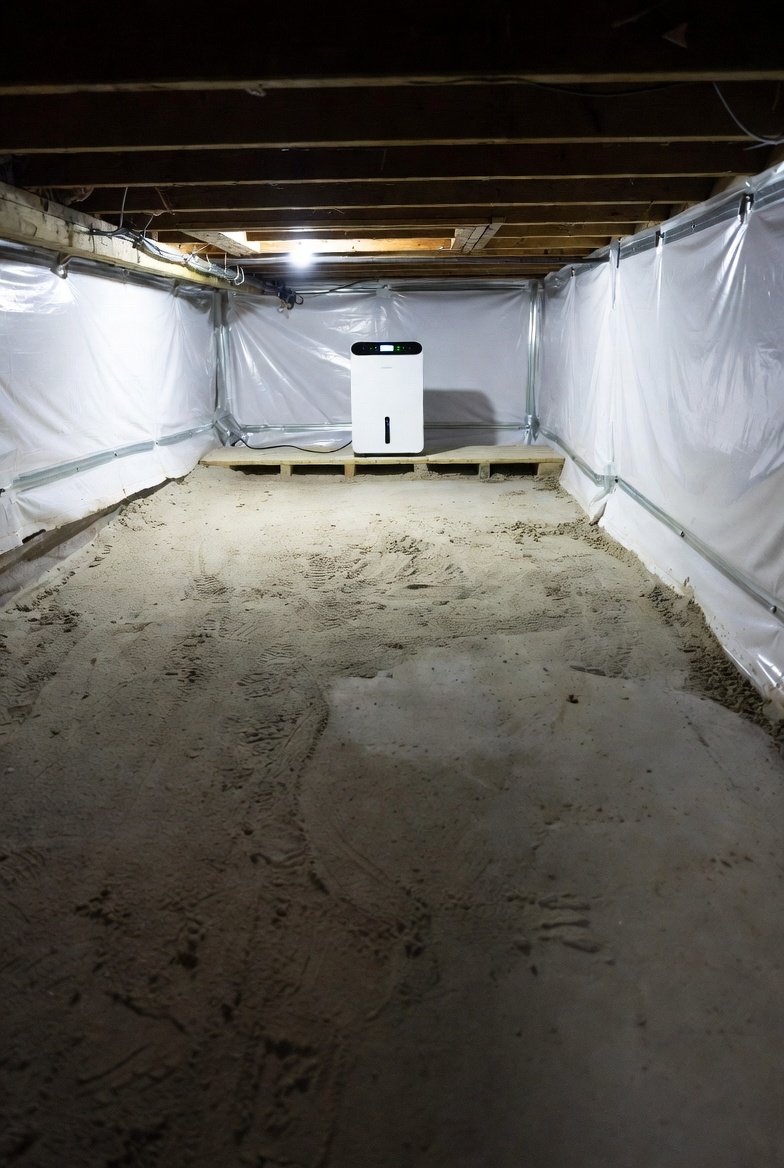
Warning Signs → Don’t Ignore Mold Risk
- RH sustained above 60%
- Condensation on joists
- Musty odor indoors
- Liner detachment >1 inch
- Visible mold spotting
Mold suspected? Review:
https://crawlspacerepairguide.com/mold-in-crawl-space/
Frequently Asked Questions
Can I automate crawl space humidity monitoring?
Yes. Remote humidity monitors with alert systems detect RH drift early.
How does climate affect dehumidifier lifespan?
High humidity climates increase compressor workload, often shortening lifespan.
Will encapsulation affect home insurance?
Generally no, but moisture damage claims may require proof of maintenance.
Can neglect shorten liner lifespan?
Yes. Seam separation under high humidity accelerates deterioration.
What tools do I need for DIY inspection?
Flashlight, moisture meter, humidity monitor, and protective gloves.
Does maintenance improve resale value?
Yes. Inspection documentation reassures buyers and home inspectors.
Final Perspective
Encapsulation is not maintenance-free.
But it is predictable.
Quarterly monitoring, annual inspection, and disciplined humidity control protect structural integrity, air quality, and long-term home value.
Encapsulated crawl space maintenance isn’t reactive.
It’s preventative strategy.