
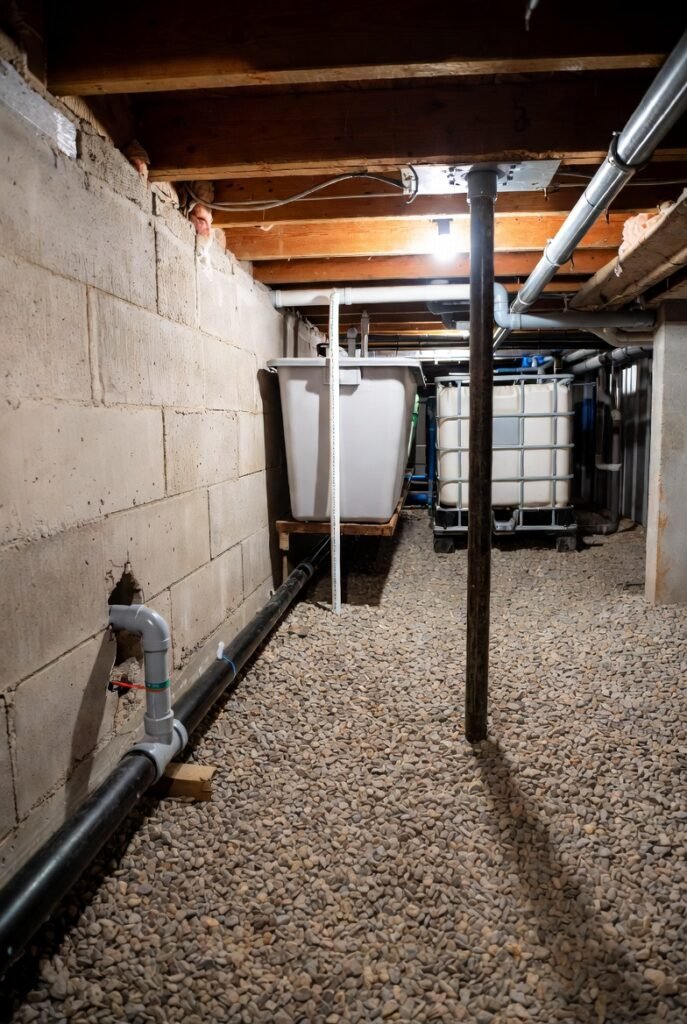
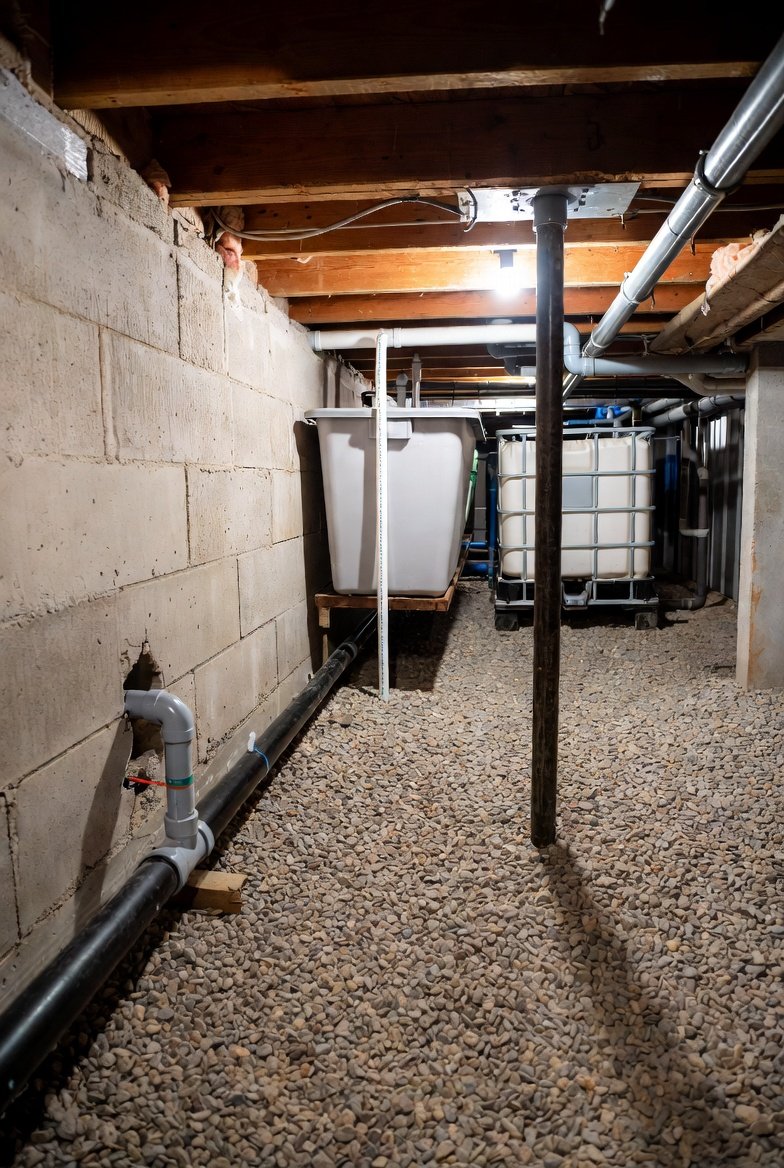
Crawl Space Drainage Solutions: System Types, Structural Role, and What They Actually Prevent
Crawl space drainage solutions are often described as optional upgrades or moisture improvements. Structurally, they are neither. They exist because every home interacts continuously with subsurface water — and without a controlled pathway, that water does not simply disappear.
Beneath most houses, soil holds moisture year-round. After rainfall, seasonal groundwater shifts, or prolonged saturation, pressure builds quietly below the structure. When that pressure has nowhere predictable to go, the water in crawl space frequently becomes the release zone.
Drainage systems are not primarily about convenience.
They are about structural predictability.
This page explains crawl space drainage solutions from a system-reality perspective — how they function, what water behaviors they address, and why unmanaged water changes the physical environment beneath a home.
It does not recommend products or installation methods.
The Structural Purpose of Drainage (Not Just Water Removal)
At a building-science level, drainage exists to answer one question:
Where will subsurface water go?
If the answer is “nowhere,” water tends to:
- remain against foundation materials
- migrate laterally beneath the structure
- reappear in recurring patterns
- extend drying cycles
Moisture guidance consistently emphasizes that wet materials should be dried quickly — often within 24–48 hours — because prolonged dampness increases the likelihood of mold development. United States Environmental Protection Agency guidance highlights moisture control as a primary prevention strategy.
Drainage systems support that drying window by preventing water from lingering.
Structural insight:
Drainage protects time — the time materials have to dry before deterioration begins.
The Drainage Severity Ladder (System Hierarchy)
Not all crawl space drainage solutions address the same level of water behavior.
Understanding this hierarchy is what separates surface education from structural literacy.
LEVEL 1 — Moisture Guidance
Designed for environments where dampness appears but does not pool.
Goal: encourage movement rather than stagnation.
LEVEL 2 — Seepage Interception
Targets slow pressure-driven moisture entering at edges or interfaces.
Goal: capture water before it spreads.
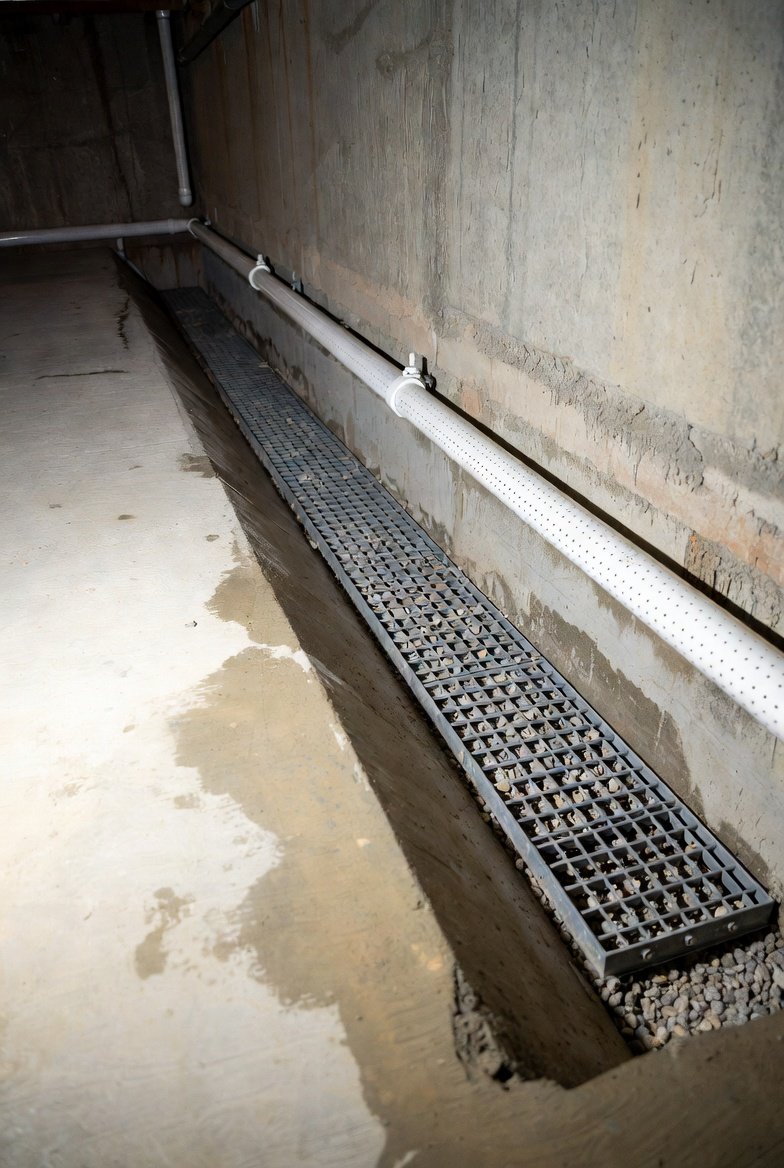
LEVEL 3 — Interior Perimeter Collection
Installed where foundation walls meet the crawl space floor — a natural pressure concentration zone.
Goal: control lateral movement across the crawl space.
LEVEL 4 — Subsurface Pressure Relief
Interacts conceptually with groundwater behavior to reduce inward force.
Hydrostatic pressure — the force exerted by water-laden soil — is widely recognized in foundation engineering as a contributor to seepage patterns. Water seepage in crawl space
Hydrostatic pressure
Goal: influence how water moves before it enters.
LEVEL 5 — Flood-Control Routing
Designed for environments where water accumulation can overwhelm passive pathways.
Goal: restore directional flow when natural drainage is insufficient.
Authority takeaway:
The “best” system is not universal — it is the one aligned with the severity of water behavior.
What Actually Happens When Drainage Is Missing
(The Drainage Failure Cascade)
Water rarely creates immediate structural drama.
Instead, a predictable cascade often unfolds:
1️⃣ Water lingers longer after wet periods
2️⃣ Soil humidity remains elevated
3️⃣ Materials experience incomplete drying
4️⃣ Environmental conditions stabilize around dampness
5️⃣ Secondary risks increase over time
Many homes tolerate early stages quietly — which is why drainage absence is frequently underestimated.
Inspection perspective:
Recurring damp zones near foundation edges often reflect subsurface movement rather than surface leaks.
Interior Perimeter Systems — Controlling Edge Pressure
These systems operate where seepage most naturally appears.
Conceptually they:
- intercept water along interior edges
- guide it toward a controlled pathway
- reduce cross-crawl-space migration
They assume some water entry is environmentally inevitable — and prioritize control.
Micro-authority line:
Perimeter systems manage direction, not weather.
Subsurface Behavior Systems — Working With Water Physics
Water follows resistance gradients.
When soil becomes saturated, pressure rises until movement becomes possible.
Subsurface-influencing drainage concepts aim to:
- provide a lower-resistance route
- reduce concentrated inward force
- stabilize moisture behavior beneath the structure
This is less about blocking water — more about guiding it.
Directed Discharge — The Most Overlooked Structural Step
Every drainage system ultimately depends on exit reliability.
Without discharge:
Collection becomes storage.
Storage becomes recurrence.
A complete system answers three questions:
Where is water captured?
Where is it routed?
Where does it end up?
Break the chain anywhere — performance collapses.
Myth Boundary — Drainage Does NOT Mean Waterproof
One of the most persistent homeowner misconceptions is equating drainage with waterproofing.
They solve different problems.
Drainage: controls liquid movement.
Waterproofing: attempts to resist entry.
Neither replaces the other universally.
Structural environments often rely on layered strategies.
Why Other Crawl Space Systems Depend on Drainage
Unmanaged liquid water quietly limits the effectiveness of nearly everything else below the floor system.
When water remains:
- insulation struggles to perform
- drying cycles shorten
- humidity stabilizes at higher levels
- odors persist longer
Drainage is rarely the whole solution.
But without it, other systems operate in a compromised environment.
Why Drainage Systems Are Considered Structural Safeguards
Homes are static. Soil is not.
Moisture levels shift seasonally. Groundwater rises and falls. Pressure redistributes.
Drainage solutions exist to create predictability inside a naturally dynamic environment.
They do not stop weather.
They stabilize how a structure interacts with it.
When a Conceptual Overview Stops Being Enough
Understanding system categories is valuable.
But water behavior — not system names — determines alignment.
Patterns worth observing include:
- edge vs center appearance
- timing relative to rainfall
- persistence duration
- recurrence across seasons
Those patterns reveal whether moisture is episodic… or systemic.
Key Structural Perspective
Crawl space drainage solutions are less about removing water once — and more about ensuring water never becomes behaviorally unpredictable beneath the home.
Control creates stability.
Stability protects materials.
Protected materials preserve structural consistency.
Drainage, at its core, is about environmental order beneath a structure that depends on it.