
Crawl Space Sump Pump: Mechanical Role, Protective Function, and When Homes Typically Need One
A water in crawl space sump pump is not designed to improve comfort or upgrade a home. It exists for one reason: to provide mechanical water removal when natural drainage can no longer protect the structure.
Beneath many homes, subsurface water behaves unpredictably. Soil saturation rises, groundwater shifts, and pressure builds quietly below the floor system. When that water reaches a low point with no reliable exit path, passive drainage stops working.
At that moment, a sump pump becomes the mechanical boundary between collected water and prolonged structural exposure.
This page explains what a crawl space sump pump does, how it functions within a drainage environment, and the types of water behavior that typically justify its presence. It does not recommend specific products or installation methods.
The Mechanical Purpose of a Crawl Space Sump Pump
At a structural level, a sump pump answers a single question:
What happens when gravity fails?
Water normally depends on slope and drainage pathways to move away from a home. But in crawl spaces — often near or below grade — gravity alone may not create reliable flow.
A sump pump introduces forced movement.
Instead of waiting for water to recede naturally, the system removes it before prolonged exposure can occur.
Moisture control guidance consistently emphasizes rapid drying after water intrusion because damp materials significantly increase the likelihood of mold development. United States Environmental Protection Agency
Mechanical removal supports that drying window.
Authority takeaway:
A sump pump protects time — the time structural materials have before moisture-related deterioration begins.
What a Crawl Space Sump Pump Actually Is
A crawl space sump pump is a mechanical component within a broader water-management system.
Its function is intentionally narrow.
It does NOT:
- stop groundwater movement
- prevent seepage
- waterproof foundation materials
- control humidity
Instead, it removes water after collection.
Think of it as the final step in a controlled drainage sequence.
Core Components That Create Mechanical Removal
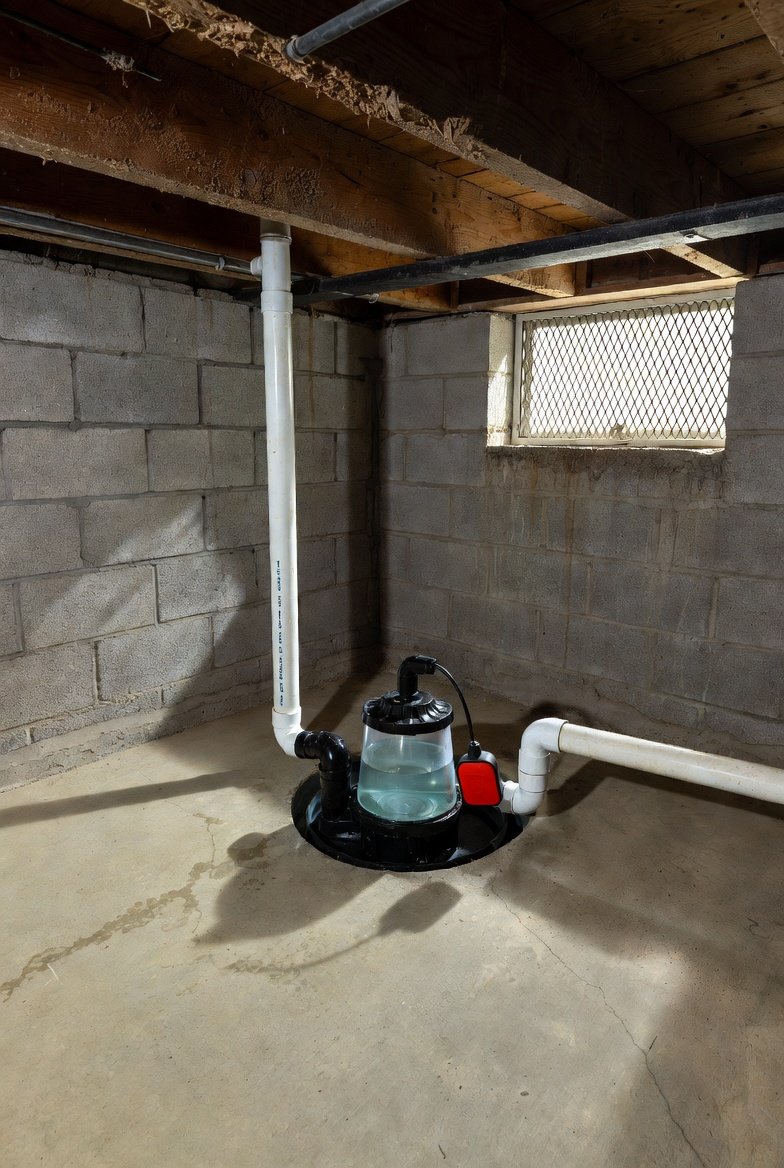
Although designs vary, most systems share four structural elements:
Collection Basin
A recessed low point where water is intentionally directed.
Pump Mechanism
Activates once water reaches a predetermined level.
Float or Sensor
Triggers automatic operation without human intervention.
Discharge Line
Carries removed water away from the crawl space footprint.
System insight:
No routing → no collection.
No collection → no activation.
The pump only protects what reaches the basin.
The Mechanical Boundary Concept
(Why Pumps Are Considered Safeguards)
In many homes, water presence is environmental — not preventable.
What IS preventable is prolonged contact between that water and structural materials.
A sump pump creates a boundary:
Water may arrive.
But it does not remain.
This distinction is why pumps are often described as protective infrastructure rather than convenience equipment.
Risk Environments Where Sump Pumps Commonly Appear
The presence of a sump pump usually reflects predictable water behavior beneath the structure.
Homes frequently rely on mechanical removal when:
- groundwater rises seasonally
- Water seepage in crawl space
- seepage concentrates at foundation edges
- exterior elevation limits natural drainage
- clay-heavy soils retain moisture
- water repeatedly migrates to the same low area
These conditions signal that passive systems alone may not maintain reliable dryness.
Micro-authority line:
A sump pump is rarely installed for hypothetical risk — it typically responds to observed water patterns.
How a Crawl Space Sump Pump Works
(Mechanical Flow Sequence)
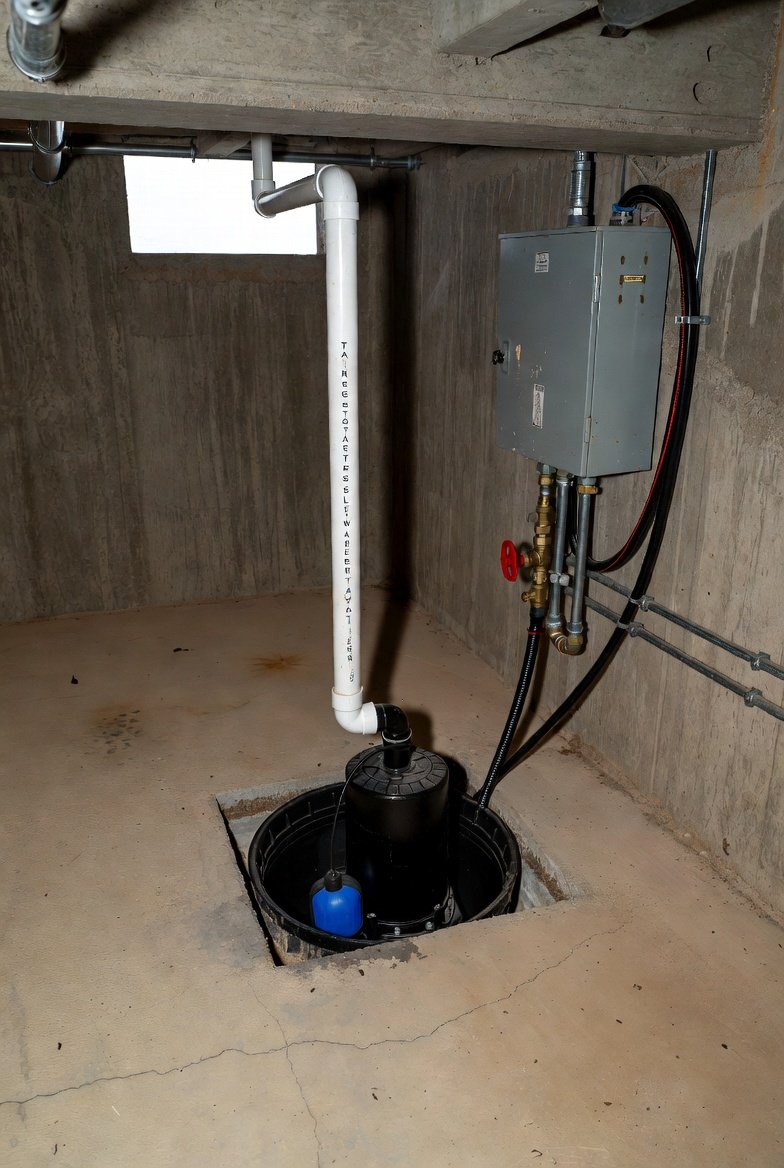
Water removal follows a structured progression:
- Routing — drainage pathways guide water inward
2. Containment — the basin isolates collected water
3. Detection — rising levels trigger activation
4. Removal — the pump forces discharge away from the structure
Each step protects the next.
Break the chain — protection weakens.
Why a Sump Pump Does NOT Replace Drainage
One of the most persistent homeowner misconceptions is assuming a pump alone solves water behavior.
It does not.
Drainage guides water.
The pump removes it.
Without routing, water may never reach the basin.
Without removal, collected water becomes prolonged exposure.
Both roles are structurally interdependent.
Mechanical Dependency Most Homeowners Overlook — Power
Unlike passive drainage, a sump pump depends on electricity.
If power fails:
Removal stops.
Water rises.
This dependency is why mechanical water-management systems are often evaluated as part of broader structural risk planning.
Inspection perspective:
Homes occasionally show elevated moisture after storms simply because the pump lost power — not because the system failed.
Failure Scenarios — Understanding the Real Risk Boundary
Mechanical safeguards reduce risk, but they do not eliminate it.
Common vulnerability points include:
- power interruption
- discharge blockage
- float malfunction
- inconsistent water routing
When these occur, water behavior reverts to environmental control rather than mechanical control.
If removal fails during heavy events, conditions can escalate into crawl space flooding.
Authority insight:
The greatest risk is rarely the presence of water — it is the loss of removal capability.
Myth Boundary — A Sump Pump Does NOT Waterproof a Crawl Space
This misconception is widespread.
A sump pump manages accumulation.
Waterproofing attempts to resist entry.
Many structures rely on layered strategies because subsurface moisture is dynamic, not static.
Understanding this boundary prevents unrealistic expectations.
Why the System Matters More Than the Pump
Homeowners often focus on the pump itself — horsepower, brand, capacity.
Structurally, those details matter less than water behavior.
The critical questions are:
Why is water reaching the basin?
How consistently is it routed?
Where is it discharged?
A powerful pump cannot compensate for unpredictable water flow.
A sump pump operates as part of broader crawl space drainage solutions, not as a standalone fix.
Structural Perspective — Pumps Protect Exposure Windows
Water intrusion does not always destroy materials immediately.
Damage often depends on duration.
When water is removed quickly:
- drying cycles remain intact
- humidity spikes shorten
- material stress decreases
Mechanical removal preserves environmental balance beneath the home.
When a Conceptual Understanding Isn’t Enough
Surface observations rarely reveal subsurface pressure patterns.
Recurring basin activation often indicates groundwater dynamics rather than isolated weather events.
Tracking patterns — not single incidents — provides the clearest picture of why mechanical removal is occurring.
Key Structural Insight
A crawl space sump pump is best understood not as a convenience device but as a mechanical safeguard operating inside a naturally wet environment.
It does not stop water from existing beneath a home.
It ensures that water does not remain long enough to redefine the structural conditions above it.