
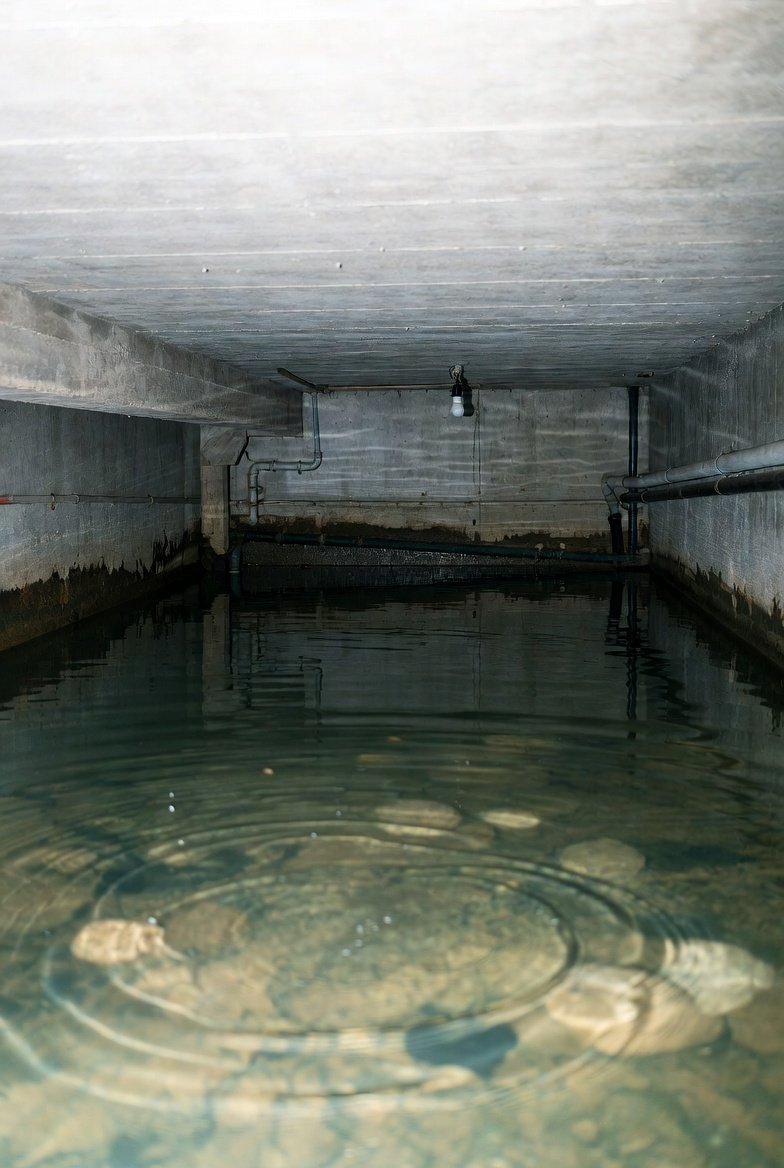
Standing Water in Crawl Space: Why “It’s Fine” Is a Costly Misconception
Standing water in a crawl space is rarely dramatic. There is often no immediate failure, no collapsing structure, and no urgent alarm from above. Because of this, many homeowners assume the condition is harmless — something that will evaporate, drain away, or resolve with changing weather.
This assumption feels logical.
Structurally, it is often wrong.
Standing water beneath a home represents more than moisture. It signals that the environmental conditions supporting the structure have shifted from predictable to unstable. Homes are designed around controlled interaction with soil and air. When water begins to accumulate instead of migrate, that control weakens.
This page exists to reframe a common belief — that standing water is “fine.” It explains what pooling water actually indicates, why the absence of immediate damage can be misleading, and where the real boundary lies between temporary exposure and environmental stress.
It does not recommend repairs or systems.
The Misconception That Standing Water Is Harmless
The myth persists because standing water often appears quiet.
Homeowners commonly reason:
- “It’s just leftover rain.”
- “It disappears after a few days.”
- “Nothing inside the house seems affected.”
These observations are understandable — but they focus on visibility rather than behavior.
Water beneath a structure is not evaluated by how it looks in a moment.
It is evaluated by what it changes over time.
What Standing Water Actually Represents
Standing water forms when water enters faster than it can exit.
At a structural level, this typically means one thing:
The crawl space has lost reliable moisture equilibrium.
Instead of moving through predictable pathways, water is remaining inside the structural footprint.
Moisture guidance consistently emphasizes rapid drying — often within 24–48 hours — because prolonged dampness significantly increases the likelihood of mold development. United States Environmental Protection Agency
Pooling water directly interferes with that drying window.
Authority takeaway:
Standing water is not just presence — it is persistence.
Persistence is what alters environments.
In many homes, standing water develops after repeated water seepage in crawl space conditions overwhelm natural drying.
Hidden Doesn’t Mean Harmless
Crawl spaces are rarely inspected daily. Conditions can shift gradually without obvious warning.
Because pooling water is out of sight, the absence of visible damage can feel reassuring.
But structural environments do not operate on reassurance — they operate on exposure duration.
Water that remains:
- extends humidity cycles
- slows material drying
- stabilizes damp conditions
None of these effects require immediate failure to matter.
Micro-perspective:
Many structural issues begin quietly, not catastrophically.
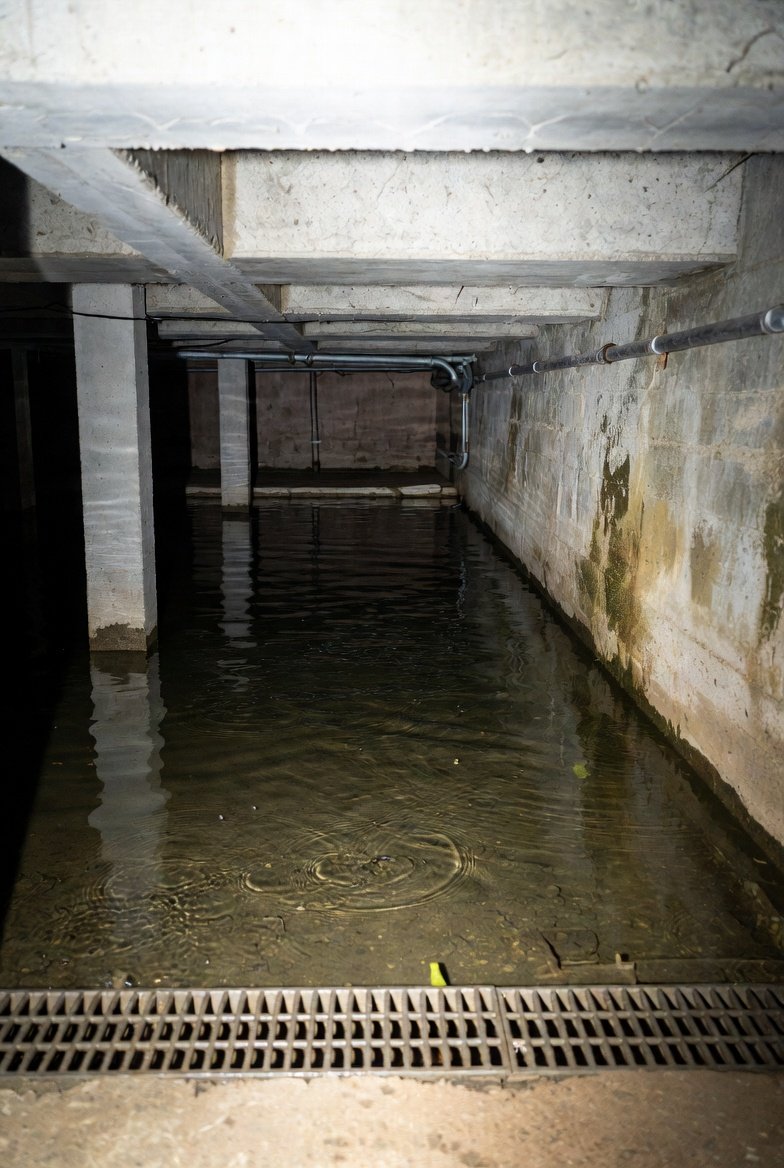
The Delay Illusion — Why Problems Often Appear Later
One reason the “it’s fine” myth survives is timing.
Standing water does not always produce instant consequences. Instead, it often creates a delayed chain of environmental changes.
Typical progression:
1️⃣ Water accumulates
2️⃣ Materials absorb moisture
3️⃣ Drying becomes incomplete
4️⃣ Humidity remains elevated
5️⃣ Secondary symptoms appear
By the time odors, uneven flooring, or air changes are noticed, the environmental shift beneath the home has usually existed for months.
The delay makes the original signal easy to dismiss.
Standing Water vs Temporary Moisture
(A Boundary Many Homes Cross Without Realizing)
Not all crawl space dampness carries the same structural meaning.
Temporary Moisture
- damp soil
- short-lived condensation
- brief exposure after extreme weather
These conditions reflect environmental interaction.
Standing Water
- visible pooling
- defined waterlines
- recurring accumulation
- persistence beyond drying cycles
This reflects environmental stress.
Critical distinction:
Moisture touches surfaces.
Standing water reshapes the environment around them.
The Stability Concept — Why Pooling Water Matters Structurally
Homes depend on environmental consistency beneath the floor system.
Soil expands and contracts. Groundwater rises and falls. Moisture fluctuates.
Drainage patterns create predictability within that movement.
When water begins pooling, predictability weakens.
Instead of controlled migration, the crawl space becomes a retention zone.
Structural insight:
Stability below supports stability above.
Why Standing Water Rarely Stays a One-Time Event
Water follows resistance paths through soil.
If it finds a low point once, it often returns.
Common drivers include:
- saturated soil beneath the structure
- pressure-driven groundwater movement
- recurring runoff patterns
- seasonal moisture cycles
Even when water recedes, the pathway usually remains.
This is why pooling tends to repeat in the same locations.
Environmental Effects That Extend Beyond the Crawl Space
Standing water rarely stays isolated.
Air naturally moves upward through framing gaps, wiring penetrations, and mechanical openings.
As moisture evaporates, it increases vapor presence within the crawl space water— influencing the air above.
Possible downstream effects include:
- persistent musty odors
- elevated indoor humidity
- heavier HVAC workload
These changes often appear gradually rather than suddenly.
Severity Progression — How Risk Typically Evolves
Understanding progression helps clarify why early pooling deserves attention.
Stage 1 — Episodic Pooling
Water appears after major saturation events but clears slowly.
Stage 2 — Recurring Accumulation
Pooling returns during predictable weather cycles.
Stage 3 — Environmental Shift
Drying becomes incomplete; dampness stabilizes.
Stage 4 — Material Exposure
Structural components experience prolonged moisture contact.
Most homes do not jump stages.
They drift.
And drift is harder to notice than failure.
Why the Myth Persists
Standing water often avoids dramatic signals.
It may:
- disappear between storms
- remain hidden from daily life
- produce subtle early effects
Without visible urgency, normalization begins.
Yet structural environments are shaped by patterns — not isolated observations.
Authority insight:
The absence of crisis does not equal the presence of safety.
When Standing Water Becomes a Diagnostic Signal
Pooling water is rarely meaningful in isolation.
Its significance comes from pattern recognition:
- frequency
- duration
- location consistency
- seasonal recurrence
These patterns reveal whether water behavior is incidental… or systemic.
Because crawl space dynamics are largely invisible from above, observation alone may not capture the full picture.
A neutral inspection can help distinguish temporary exposure from environmental instability.
Key Perspective
Standing water beneath a home is best understood not as a cosmetic issue, but as a shift in how the structure interacts with moisture.
Water may arrive in many environments.
What matters is whether it leaves predictably.
When it does not, the crawl space transitions from a buffered zone into an active moisture environment — one capable of influencing materials, air, and long-term structural conditions.
This page’s purpose is not alarm.
It is clarity.